Is Menorca Good for Freediving?
Menorca is quietly becoming one of the Mediterranean’s best kept secrets for freediving. While many divers think of tropical destinations or deep-water competitions, this small Balearic island offers something far rarer: wild coastline, crystal-clear water, marine caves and calm conditions that make every dive feel slow, deep and natural.
So is Menorca really good for freediving?
The short answer is yes, and in many ways, it is exceptional.
Clear water and natural depth
One of the most important factors in freediving is visibility. Menorca regularly offers 20 to 25 meters of visibility, sometimes more in spring and autumn. This means you can see the line, the seabed and the light above you at the same time, something that makes diving safer, more comfortable and more beautiful.
The island’s underwater topography is also ideal. Limestone cliffs drop directly into blue water, creating natural vertical walls that are perfect for rope diving, exploration and training.
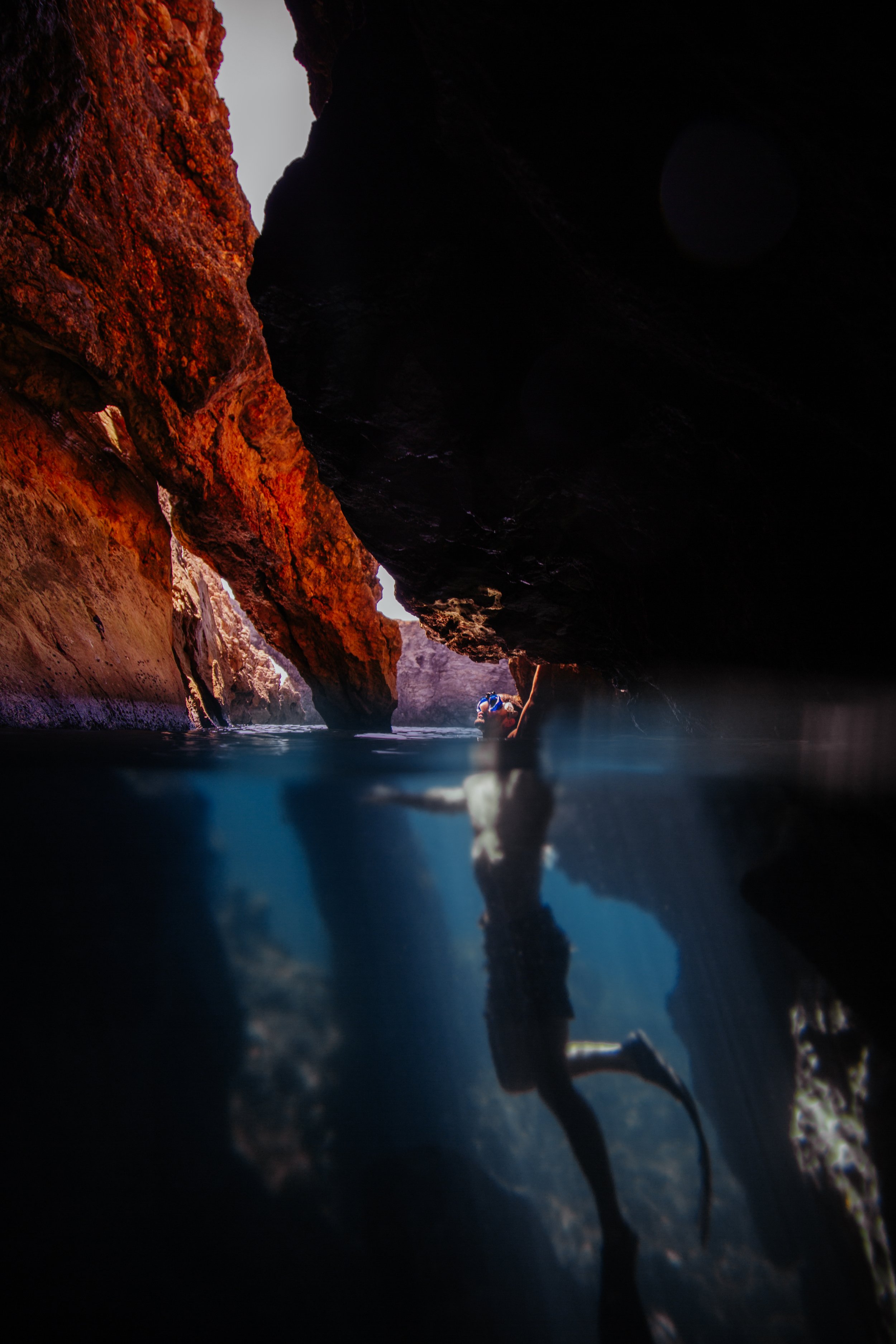
Sea caves you can only reach by boat
What truly sets Menorca apart is its coastline. Hundreds of sea caves, underwater arches and hidden chambers are carved into the white limestone cliffs. Many of them are completely inaccessible from land and can only be reached from the sea.
Some caves open below the surface and lead into huge, silent rooms filled with blue light. These are places where freediving becomes more than a sport, it becomes an exploration.
These caves are often difficult to locate for anyone unfamiliar with the area. Depending on the time of day and the season, the quality and direction of the light inside the caves can change dramatically, transforming the atmosphere entirely. Only a local guide who knows the coastline well can determine the best times to visit each cave safely and experience them at their most spectacular.
Calm conditions most of the year
Menorca is exposed to the tramontana wind, which can blow strongly at times. However, as an island, there is almost always a sheltered side where conditions remain calm, making rope diving and cave exploration possible even on windy days. Unlike other ports such as Fornells or Addaia, Ciutadella is naturally protected from the tramontana, allowing boats to safely depart and reach calm dive spots. This makes it an ideal base for freedivers looking to explore caves, swim-throughs, and the island’s hidden coastal locations without being limited by wind conditions.
The best months are May, June, September and October. During these shoulder seasons, the sea is warm, the visibility is excellent and the island is still quiet.
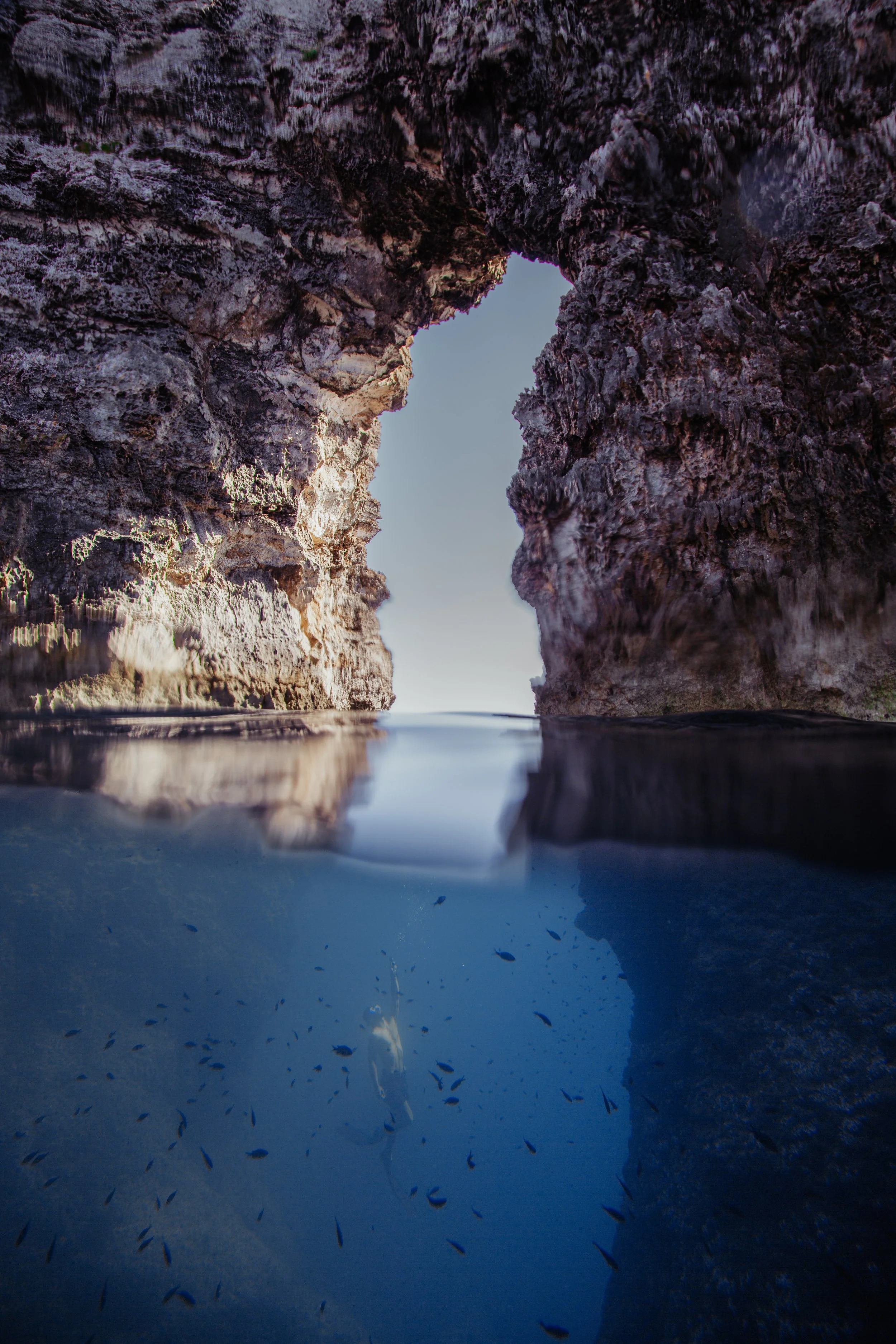
Perfect for both beginners and experienced freedivers
Beginners benefit from:
calm water
shallow shelves before deep drop-offs
easy boat access
clear visibility
Experienced freedivers enjoy:
clean blue water
vertical walls
sea caves, arches and hidden chambers
ideal conditions for FIM, CWT and CNF
It is rare to find a place that works so well for both.
If you want a deeper look at how freediving is practiced in Menorca — including rope disciplines, sea caves and private boat access — you can read our full guide to Freediving in Menorca.
Why freediving from a boat changes everything
Many of Menorca’s best dive spots are not connected to any beach. A boat allows you to:
avoid crowds
reach untouched sites
choose the best conditions of the day
dive directly over deep water and cliffs
This is why private boat freediving is the most authentic way to experience the island.
A different way to experience Menorca
Freediving here is not about records or competition. It is about light, silence, caves, blue water and moving slowly through a wild landscape.
Menorca offers something very rare in Europe:
a Mediterranean sea that is still clear, quiet and full of places that few people ever see.
And on a single breath, you can explore it.