Freediving in Menorca – Explore Sea Caves and the Mediterranean on One Breath
Menorca is an island meant to be discovered slowly. From the sea, its limestone cliffs, hidden coves and marine caves reveal a wild, untouched beauty that few places in the Mediterranean still offer. It is also one of the finest destinations for freediving, where calm waters, light and geology come together to create extraordinary underwater experiences.
But before entering the turquoise depths of Menorca, it helps to understand what freediving really is.
What is freediving?
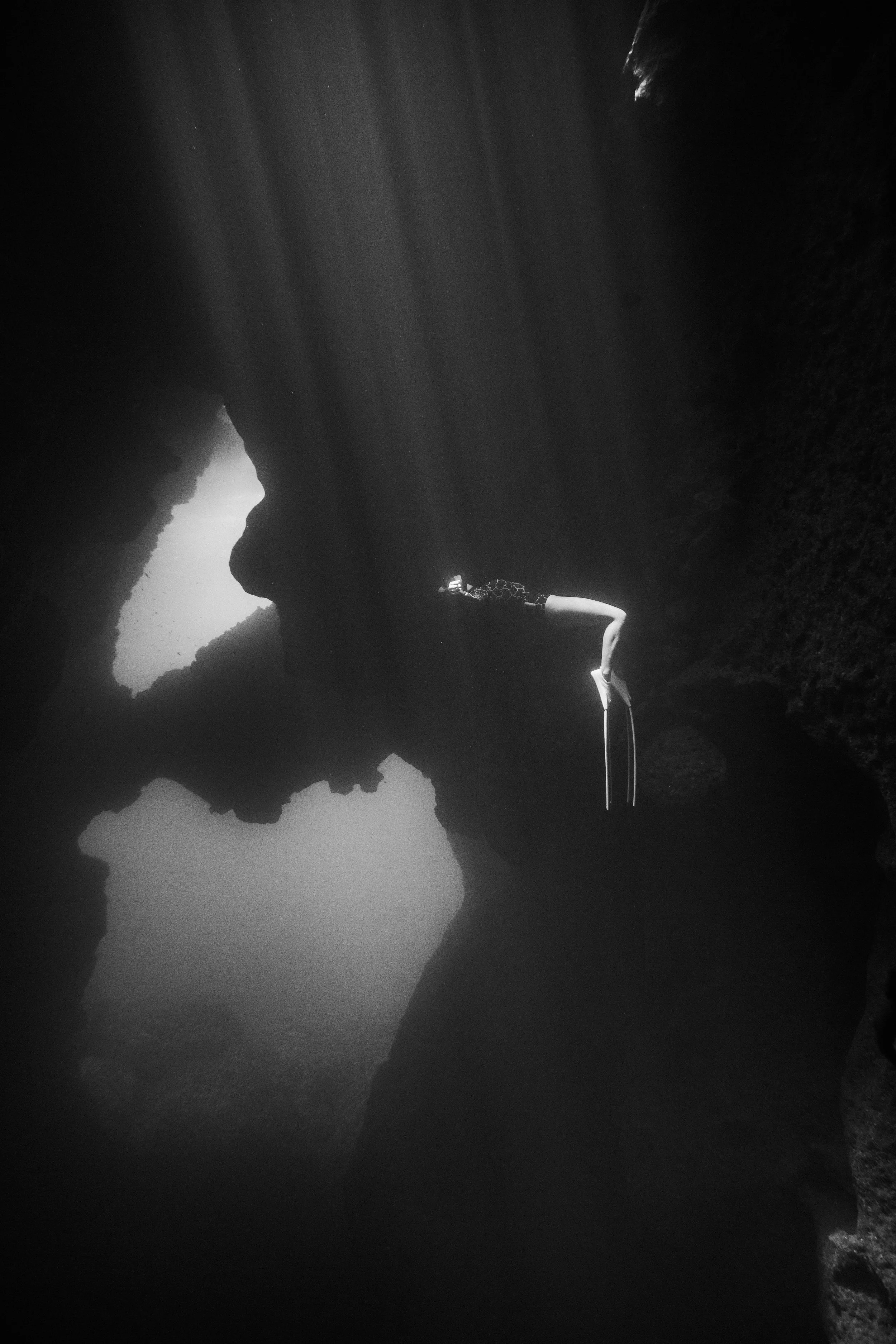
Freediving is the practice of diving underwater on a single breath, without tanks or breathing equipment. Unlike scuba diving, which relies on compressed air and complex gear, freediving is radically minimalist. Your body is your only equipment. Your breath is your only resource.
At its core, freediving begins long before you enter the water. It starts with breathing. Slow, controlled ventilation prepares the body and calms the nervous system. By lowering the heart rate and relaxing the muscles, a freediver learns to use oxygen efficiently and delay the urge to breathe. This conscious relationship with respiration is what makes freediving so unique, it is not about forcing the body, but about understanding it.
But freediving is not only relaxation. It is also a demanding sport that requires discipline, technique, flexibility, strength, and mental control. Descending along a line or exploring a deep cave requires precise buoyancy management, equalization skills, and the ability to stay calm under pressure. Progress happens gradually, through training, awareness, and patience.
At the same time, freediving offers something rare in modern life: peace. When you dive in apnea, movements slow down, breathing stops, and your attention shifts inward. The outside world fades into the background, replaced by a deep sense of presence.
There is no heavy equipment, no dependency on technology, only your body, your breath, and the surrounding water. Time seems to stretch. Each movement becomes deliberate. Each sensation becomes clearer.
In this suspended state, freediving becomes more than a sport. It becomes a practice of awareness, a way to reconnect with your body, control your mind, and experience the underwater world with calm and clarity.
Why Menorca is a freediving paradise
Menorca’s coastline is geologically unique and divided into two distinct worlds, each offering a completely different freediving atmosphere.
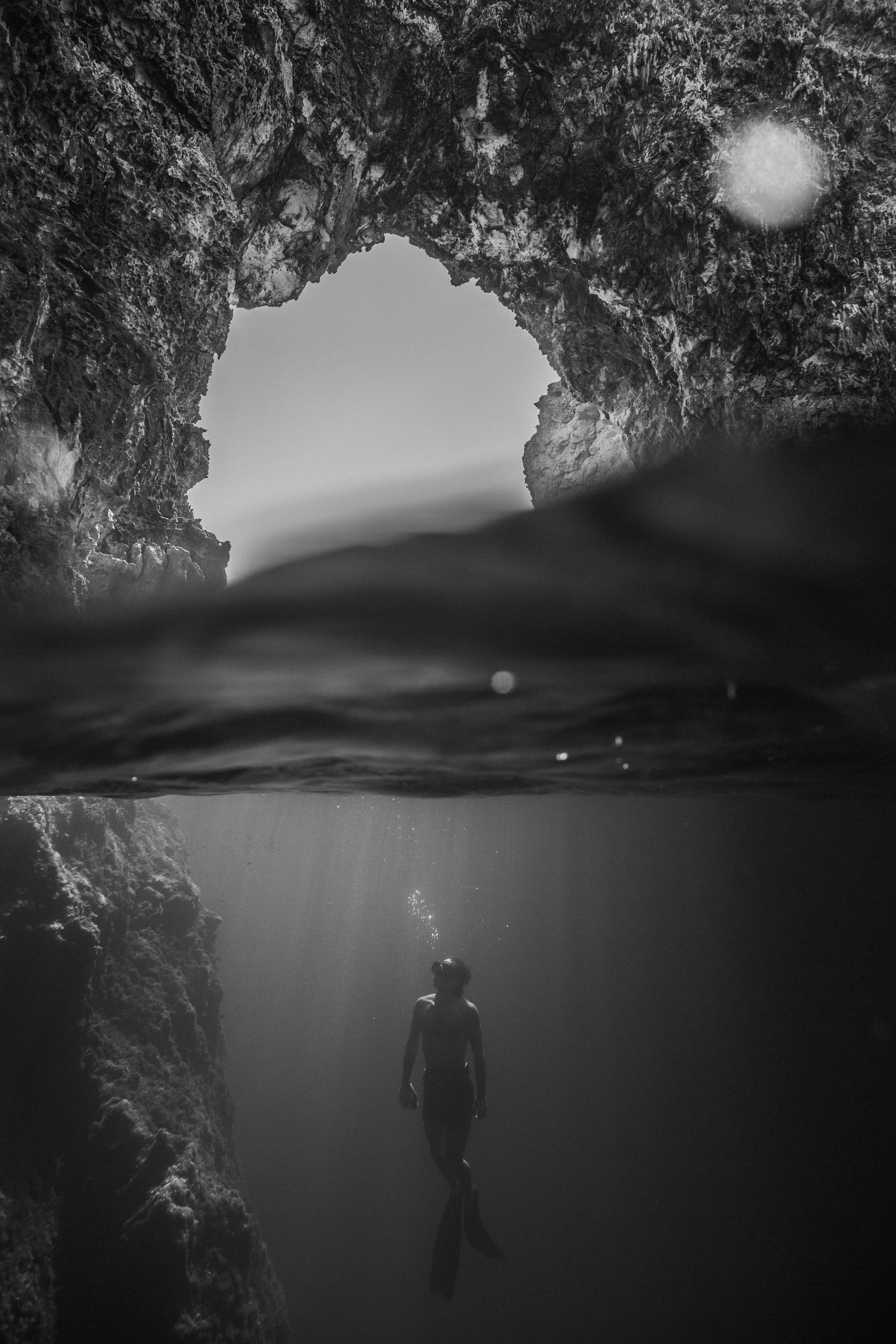
In the south, towering white limestone cliffs hide dozens of sea caves, underwater arches, and secret chambers that can only be reached from the sea. The rock is sculpted by erosion, creating smooth walls, caverns, swim-throughs, and dramatic blue-light entrances. The water here often glows turquoise against the pale stone, creating the kind of Mediterranean scenery most people imagine but rarely experience from below the surface.
In the north, the landscape changes completely. The coastline becomes wilder and more rugged, shaped by ancient reddish and darker rock formations. Instead of smooth limestone caves, you find dramatic headlands, raw textured cliffs, deeper drop-offs, and powerful open-water scenery. The seabed is rockier, the colors more intense, and the atmosphere feels untamed. Freediving here feels different, more exposed, more dramatic, more elemental.
Few Mediterranean islands offer such geological contrast within such a short distance.
Some caves open below the surface and lead into vast chambers filled with blue light and reflections. These are places that almost no one ever sees, except freedivers.
These caves are often difficult to locate for anyone unfamiliar with the area. Depending on the time of day and the season, the quality and direction of the light inside can change dramatically, transforming the atmosphere entirely. Only someone who knows the coastline well can determine the best times to visit each spot safely and experience it at its most spectacular.
The conditions of the sea also play an important role. Menorca is exposed to the tramontana wind, which can blow strongly and create swell and surface movement. However, because it is an island, there is almost always a sheltered side where the water remains calm. This makes it possible to adapt each day’s plan and choose the best area for relaxed exploration or rope diving.
The port of Ciutadella is particularly advantageous, as it is naturally protected from the tramontana, unlike more exposed northern ports such as Fornells or Addaia. Being able to depart safely even when the north wind blows strongly is a major advantage for planning consistent freediving sessions.
The best seasons for freediving
The ideal periods for freediving in Menorca are May, June, September and October.
During these months:
The sea is calmer
There is far less boat traffic
The water is warm
Visibility is at its best
Dive sites are quiet and uncrowded
These conditions allow for slow, deep, comfortable dives perfect for rope training and underwater exploration.
Reaching the best dive sites by boat
Many of Menorca’s most beautiful caves, arches, and cliff formations are completely inaccessible from land. The island’s coastline is largely undeveloped, with long stretches of protected shoreline where there are no roads, no paths, and no easy entry points. For freedivers, this is a gift but only if you approach it from the sea.
A boat gives you the freedom to choose the right side of the island depending on wind and swell. When the tramontana blows in the north, the southern coast often offers calm, glassy water. When southern winds rise, the northern coastline becomes the sheltered option. This flexibility is one of the greatest advantages of freediving in Menorca: there is almost always a place where conditions allow safe and relaxed diving.
Access by boat also means you can reach caves that are invisible from shore. Many entrances sit low against the cliffs or open below the surface, impossible to locate without local knowledge. Some dive sites require precise positioning to avoid surge or shallow rock ledges. Approaching them slowly and correctly makes all the difference between a stressful dive and a smooth, effortless experience.
From the water, you can drift silently along limestone walls, enter marine caves filled with blue light, and explore drop-offs where the Mediterranean turns dark and endless beneath you. There is no rush, no fixed schedule, no crowded entry points, just the rhythm of the sea guiding the session.
Freediving by boat in Menorca is not only about access. It is about freedom, adaptability, and experiencing the coastline the way it was meant to be discovered: slowly, quietly, and in tune with the conditions of the day.
This is exactly what I offer aboard El Sali: private, unhurried freediving experiences designed around sea conditions, light, and the natural flow of the island.
If you’re wondering whether Menorca is really a good destination for freediving, we answer that question in detail in Is Menorca good for freediving?.
A guide who truly knows these waters
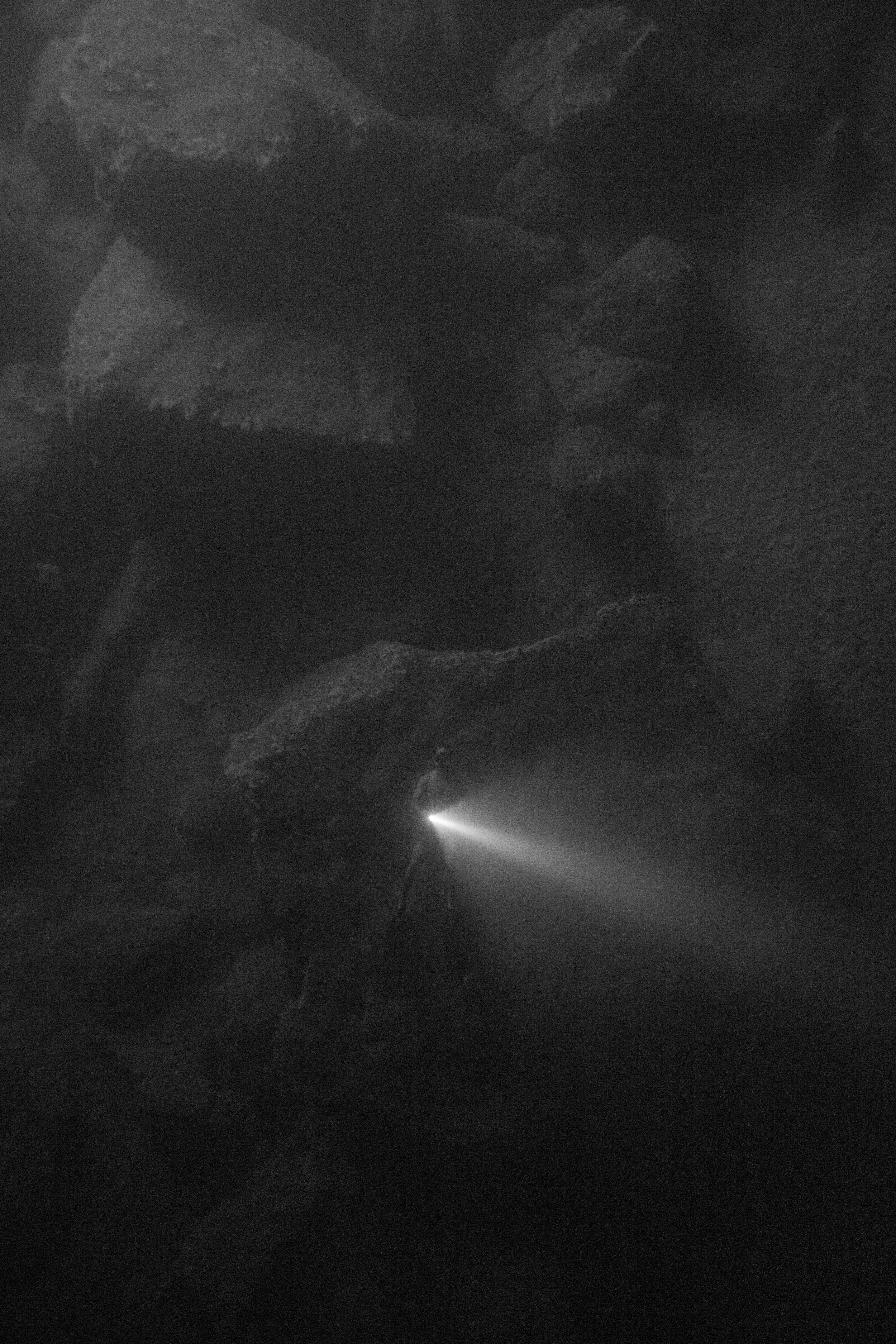
I am not only a skipper, I am also a certified freediving instructor and an underwater photographer. This means I understand safety, technique, sea conditions and how to create a smooth, calm experience in the water.
I know where the caves are, how the light moves through them, how the currents behave and which spots are best on any given day.
My goal is always the same: to create a safe, relaxed space where you can dive deeper, move more freely and truly enjoy the underwater world.
Menorca offers something rare: a wild, luminous and protected sea.
And this is exactly how I share it with you : slowly, quietly, and on a single breath.